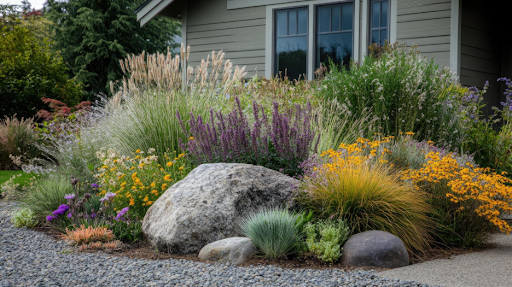
There’s a quiet irony in the way many landscapes are built today. Homeowners spend countless hours tending to plants that never wanted to live there in the first place – coaxing them with irrigation systems, chemical treatments, and an annual cycle of troubleshooting that somehow always feels familiar. Yet the landscape doesn’t push back because it’s difficult. It pushes back because it’s mismatched. When a region’s natural environment is replaced with species that don’t belong to it, the imbalance shows up first in the hose and the fertilizer bag.
That mismatch is exactly why ecological researchers and botanists – including professionals like DJ Nurre – continue to emphasize a straightforward principle: landscapes thrive when they are aligned with the land they’re built on. Native plants aren’t a sentimental choice or an aesthetic trend. They are a practical response to real environmental constraints. And nowhere is this more visible than in the way they reduce water waste and minimize reliance on chemical inputs.
The Hidden Costs of Forcing Plants to Behave
A lot of traditional settings look neat but don’t work well. Non-native ornamentals need a lot of care that doesn’t always match their beauty. They need to be watered often, the soil needs to be fixed, pests need to be controlled, fungicides need to be rotated, and nutrients need to be added. The plants are only able to stay alive because the homeowner takes care of them.
Water becomes the first casualty. Non-native species often evolved in climates with different rainfall patterns, soil structure, and seasonal rhythms. When placed in unfamiliar conditions, their stress signals show up in drooping foliage, shallow roots, and near-permanent thirst. That thirst is expensive.
Soon after, chemical sources come in. A lot of foreign plants don’t have natural ways to fight off the bugs and diseases that live in their area. They welcome problems, and pesticides are used to solve problems. Because these poisons don’t care who they hurt, they also hurt beneficial insects, which are the quiet backbone of ecosystems that work.
Why Native Plants Dramatically Reduce Water Demand
Native plants are built for the climate they’re part of. They evolved alongside local rainfall patterns, drought cycles, soil textures, and regional temperature extremes. Because of that, their root systems behave very differently from conventional ornamentals.
Most natural plants and animals have large, deep root systems that go down into the ground. These roots are like natural infrastructure; they soak up rainwater well, store water for dry times, and hold the dirt in place very securely. Native plants don’t need to be watered shallowly all the time; instead, they use the deeper stores that the land already has.
This means two things:
- Irrigation becomes supplemental rather than essential.
- Water use drops dramatically across seasons.
The Chemical Equation: Why Native Plants Need Less Intervention
Chemicals are used a lot in the traditional gardening business. Many plants that are brought in from other countries can’t protect themselves in new places, so pests and diseases have to be managed all the time. But native species developed in the same biological community as bugs, microorganisms, and animals that live in the area. They are naturally strong because they have evolved together.
There are three reasons native landscapes naturally minimize chemical requirements:
- Regional pest resistance – Native plants have defense mechanisms aligned with local insect behavior. They attract fewer outbreaks because they’re not presenting the “easy targets” that many ornamentals do.
- Stronger soil partnerships – Healthy soil ecosystems – fungi, bacteria, nematodes, and beneficial insects – form long-standing relationships with native roots. These relationships promote nutrient cycling, disease resistance, and steady plant development without chemical assistance.
- Reduced invasiveness – Non-native plants often get away from farmers and push out native environments, which forces land managers to use chemicals to control them. Native plants keep the land in place instead of changing it.
The Long-Term Impact on Soil Health and Local Ecosystems
A native landscape doesn’t improve just the visible plant layer. It rebuilds the underground architecture. Deep root systems create channels that loosen compacted soil, increase water infiltration, and feed soil organisms with organic material. Over time, this improves structure, fertility, and microbial balance – the core ingredients of a self-sustaining landscape.
Runoff goes down as the soil becomes more stable. This means that fewer chemicals like fertilizers, pesticides, and yard chemicals end up in streams and groundwater. The land gets better for everyone in the watershed, not just the homeowner.
The Future of Landscaping Is Rooted in Ecology
Native landscaping is not a trend, a movement, or a stylistic preference. It is a recalibration toward what landscapes were always meant to do: function in harmony with the land around them. By reducing water waste and minimizing chemical inputs, native gardens bring efficiency back to the environment without sacrificing beauty, structure, or long-term resilience.
Small changes in planting choices produce large changes in ecological behavior. And those changes begin with understanding one simple truth:
Landscapes thrive when we stop asking them to be something they’re not.