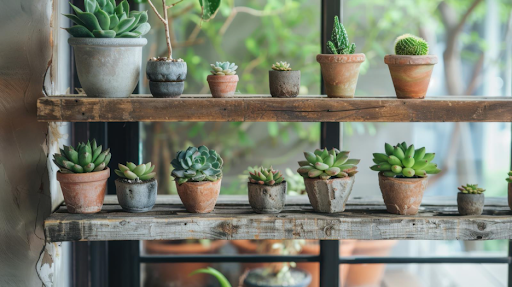
There’s something quietly radical about a small garden. Most people walk by one without giving it more than a passing glance – a patch of coneflowers, a row of native grasses, or a scattering of milkweed offering its soft riot of color. But if you pause long enough to truly observe what’s happening inside that small space, the story changes. You begin to notice how much traffic moves through it. Bees negotiating territory. Birds scanning for seed heads. Soil alive with its own commerce. A small garden, when built with intention, stops being décor. It becomes infrastructure.
That idea is hardly theoretical. It sits at the center of how botanists and ecological researchers understand urban and suburban landscapes today. Even practitioners like DJ Nurre, who spend their careers studying large ecosystems, often point out that the most meaningful ecological recovery doesn’t begin in forests or prairies. It begins in backyards, balconies, schoolyards, vacant lots, and narrow medians between sidewalks and streets.
And that’s because modern ecosystems break down in small pieces, and they recover the same way.
Why Small Spaces Carry Such Outsized Ecological Weight
Ecosystems aren’t just healthy when a lot of land is protected. They are based on how well the land is linked. Insects, seeds, birds, and nutrients can’t move as easily when areas are broken up by development, monoculture planting, or the spread of alien species. There doesn’t have to be a huge gap between two places that are still alive for the effects to be felt. A single block with the wrong plants can sometimes act like a wall.
A small garden flips that equation. It becomes a bridge.
Pollinators come back first to native plants, then to insects, then to birds, and finally to small animals. This is known as “trophic support” in the world of ecology, but in everyday language, it’s just a chain reaction. It’s not enough to just have one natural plant. The motion starts with a cluster. The biological map of a whole area starts to change when hundreds of clusters appear in a community.
This shift is measurable. Scientists now track pollinator corridors in cities the way other fields track transit systems. The movement is surprisingly similar. If the route exists, life follows it.
The Science Behind Why Small Gardens Work
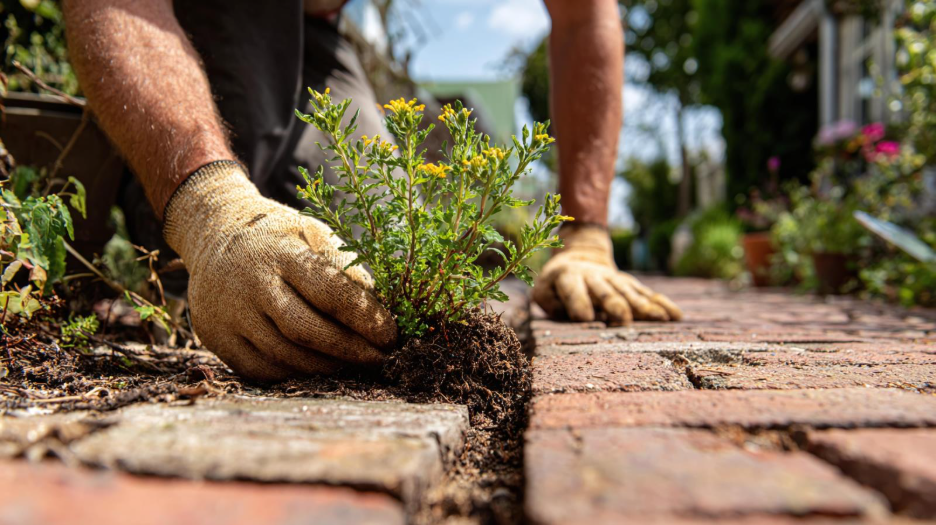
Three core principles give small gardens their restorative power:
- Native plants rebuild the base of the food web:
Many insects can only feed or reproduce on specific plants they evolved alongside. When those plants vanish, the wildlife disappears in sequence. Reintroducing native plants restores the partnerships that ecosystems rely on.
- Small gardens disrupt invasive dominance:
Invasive species thrive where the land is uniform and unmanaged. A garden with diverse native species interrupts their spread by competing for space, light, and nutrients in ways invasives can’t easily overcome.
- Soil health rebounds more quickly in small areas:
Compact patches of native vegetation repair soil structure, increase organic matter, improve water absorption, and feed microorganisms – all at a pace far faster than large-scale restoration projects can achieve
A small garden can be thought of as a seed bank for a whole area. It grows wildlife on a small scale and then spreads it to other areas through birds, insects, and the wind.
Why This Matters in an Era of Ecological Decline
The decline of pollinators. The shrinking range of native species. The rise of aggressive invasives. The increased frequency of drought conditions. These issues often feel too large for individual action, and that perception has slowed ecological recovery worldwide.
But small plants help break through that paralysis because they make it possible to take part. They change the subject from “global problem” to “local contribution,” and people are surprised at how quickly the local contribution adds up.
Small Gardens as Cultural Spaces, Not Just Ecological Ones
There’s also a cultural shift baked into this movement. A garden full of native plants carries a different story than a garden built for aesthetics alone. It becomes a space of stewardship. It invites people – children especially – to see the living world up close, not as an abstraction but as a series of daily interactions.
- A caterpillar on a leaf becomes a lesson in species dependence.
- A bee on a coneflower becomes a lesson in seasonal timing.
- A seed pod becomes the beginning of a new micro-habitat.
The psychology is just as important as the science. People who take care of native gardens tend to connect with the landscapes around them more deeply. And those connections have an effect on policies, neighborhood culture, and community planning.
Small Gardens, Big Ecological Futures
The most powerful environmental interventions are not always the largest. They are often the most replicable. A prairie restoration on 500 acres is impressive, but it’s far less achievable for most people than a 12-foot garden bed planted with native grasses and wildflowers.
Small gardens do more than just fix up land. These projects bring back links between species, groups, and people and the natural world they depend on. They make ecological recovery more like a conversation between people, so anyone can take part and everyone can profit.